Newsletter Subscribe
Enter your email address below and subscribe to our newsletter
Enter your email address below and subscribe to our newsletter

 ByJohn A
Proof of Work and Proof of Stake offer distinct security models for blockchains. PoW relies on hash power and hardware investments to secure consensus, while PoS depends on economic stake and validator governance with slashing for misbehavior. Each method shapes incentives, energy costs, and risk differently, influencing finality speed and regulatory perceptions. The trade-offs matter as networks migrate or converge, leaving questions about resilience, efficiency, and long-term viability unresolved and worth careful examination.
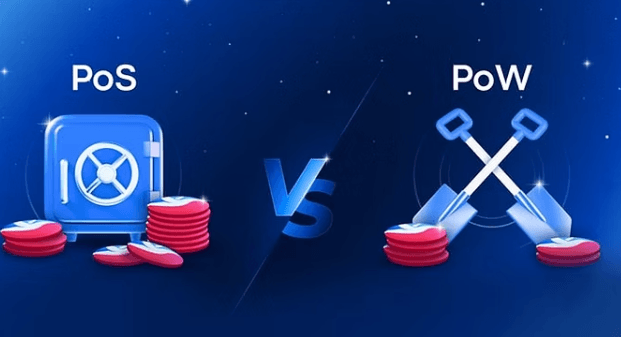
Proof of Work (PoW) and Proof of Stake (PoS) are two mechanisms for securing blockchain networks and validating transactions, each with distinct consensus economies and security assumptions.
PoW relies on brute-force hashing, energy expenditure, and miner incentives.
PoS emphasizes economic stake, validator governance, and slashing economics, yielding different risk profiles and energy efficiency considerations within decentralized systems seeking freedom and resilience.
Block validation in PoW and PoS operates through distinct procedural roles and verification workflows. In PoW, miners compete to solve a puzzle, producing a valid block that neighbors verify; in PoS, validators stake, attest, and finalize via consensus messages. The process hinges on defined validator roles and staged checks, ensuring correctness, order, and active participation within each protocol’s governance.
Security, energy consumption, and economic incentives reveal contrasting risk profiles and optimization targets between Proof of Work and Proof of Stake. In PoW, security relies on hash power and penalties for 51% risk, while PoS emphasizes stake-based security and slashing penalties, reducing energy footprint. Governance dynamics influence long-term incentives, adaptiveness, and participation, shaping system resilience and resource allocation across modalities.
Real-world trade-offs between Proof of Work and Proof of Stake hinge on practical outcomes rather than theoretical elegance: PoW emphasizes established security through computational cost and mature incentive alignment, often delivering robust permissionless participation but at high energy and hardware capital requirements.
PoS prioritizes energy efficiency, faster finality, and more tunable slashing-based penalties, potentially reducing waste while intensifying reliance on economic stake and governance responsiveness. data governance, regulatory impact.
See also: Public vs Private Blockchain Explained
Fork resolution differs: PoW relies on the chain with the most accumulated work, while PoS prioritizes finality and stake-weighted consensus. Miners vs validators influence latency and security, yet finality mechanisms reduce fork risk and improve certainty.
Long-term security debates show PoS can resist certain short-range forking paths, but remains vulnerable to long-range attacks if stake distribution becomes centralized or outdated. Attack vectors include historical-state manipulation and insufficient finality safeguards in protocol design.
Governance implications favor PoS with potential decentralization risks and centralized influence, whereas PoW historically distributes influence through resource-intensive participation; on-chain voting dynamics depend on economic incentives, stakeholder concentration, and governance centralization threats in both systems, with freedom-oriented safeguards.
Rewards in PoW decay via fixed emission schedules and halvings; PoS adjusts through stake-based mechanisms and slashing, aligning incentives with reputation incentives, stake slashing, and participation. Decay profiles reflect governance choices and network security priorities.
Yes, there are hybrid consensus and alternative models. The analysis notes hybrid consensus combines mechanisms (e.g., PoW with PoS) or uses BFT-like layers; alternative models include DAGs, proof-of-burn, and stake-plus-slash variants, each with distinct security and scalability profiles.
Both PoW and PoS shape incentives around risk and return, yet their economies diverge in energy, governance, and finality. PoW’s energy-intensive puzzle creates hardware-driven security with permissionless participation, while PoS’ stake-based governance promotes lighter energy use and rapid finality through slashing and validators. In practice, the choice echoes a trade between resource commitment and economic accountability. Like weathered ships weathering horizons, each system hints at a different horizon for trust, efficiency, and resilience in decentralized networks.