Newsletter Subscribe
Enter your email address below and subscribe to our newsletter
Enter your email address below and subscribe to our newsletter

 ByJohn A
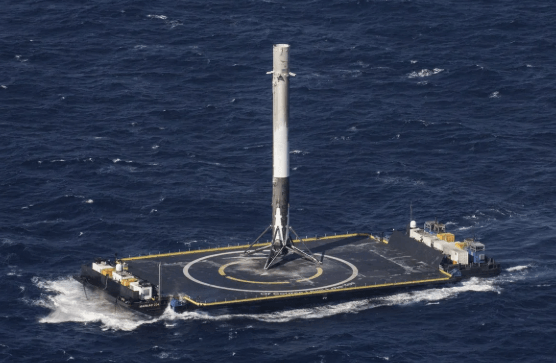
Reusable rockets hold the potential to lower launch costs through multiple missions per vehicle, modular designs, and durable components. Turnaround speed emerges as a critical lever, with logistics and refurbishment workflows shaping cycle times. Reliability and risk management must balance safety, iteration pace, and cost. A scalable blueprint links material lifecycles, supplier choices, and data-driven maintenance to mission-level savings, yet uncertainties remain about throughput, certification, and supply chain resiliency—areas that warrant close scrutiny as the approach scales.
To reduce launch costs, reusable rockets employ several complementary methods that together lower the per-flight expenditure. The analysis identifies reusable engines, improved component durability, and rapid refurbishment cycles as core drivers. Fuel budgeting, cycle optimization, and standardized interfaces further reduce downtime. A rigorous assessment anticipates iterative improvements, aligning design choices with cost discipline and scalable, freedom-oriented access to space.
Turnaround speed emerges as a pivotal, yet often underappreciated, driver of savings in reusable launch architectures. The analysis emphasizes turnaround metrics as primary indicators of cycle health, while logistics optimization coordinates ground, flight, and supply chain tasks to minimize idle time. Future models quantify marginal improvements, linking operational discipline to cost per mission and scalable, freedom-loving innovation.
The analysis articulates systematic reliability management frameworks, enabling early anomaly identification and data-driven maintenance planning.
It emphasizes risk mitigation through redundancy, phased testing, and transparent governance, projecting resilient reuse pathways while balancing cost, safety, and iteration pace for future mission architectures.
Building a cost-reduction blueprint for missions translates reliability insights into concrete efficiency strategies that can scale across architectures. The framework positions material sourcing and lifecycle analytics as core drivers, quantifying tradeoffs and enabling rapid recalibration across mission profiles. It emphasizes modular design, data-driven supplier decisions, and iterative testing, aiming for measurable savings while preserving safety, performance, and mission resilience.
See alos: Robotic Process Automation in Modern Businesses
Environmental debris from reusable rocket stages poses localized ecological risks; debris mitigation strategies are essential to minimize soil and mar ine contamination, magnetic interference, and wildlife disruption, while advancing sustainable policy, remediation protocols, and long-term environmental impact assessments.
Reuse strategies influence insurance and liability costs through risk transfer mechanisms and revised exposure profiles, potentially enabling revenue diversification while shifting uncertain financial risks away from operators, yet necessitating rigorous actuarial modeling and forward-looking governance to sustain long-term freedom-oriented investment.
Reuse can undermine mission-specific reliability requirements, as durability compromises may create reliability tradeoffs while meeting mission-specific constraints; future analysis must quantify margins, integrate risk-informed design, and preserve operational freedom without eroding core reliability expectations.
“Learning curves await,” a concise proverb notes. The learning curve for new aerospace suppliers shows initial slowness, then rapid acceleration as onboarding processes mature; supplier onboarding gains efficiency through standardized protocols, risk-informed training, and measurable quality milestones.
Launch cadence and geographic constraints shape savings by balancing frequencies against travel, permitting, and insurance liabilities; environmental impacts, debris, and liability costs influence reliability requirements, mission-specific needs, and reuse strategies, while the learning curve guides aerospace suppliers toward scalable, cost-efficient solutions.
In the nascent era of reusable rocketry, costs hinge on timing as much as technology. The most decisive gains emerge from swift turnaround, disciplined data-driven maintenance, and modular, race-ready components. Every decision—materials lifecycle, supplier choices, logistics—tightens the cycle and sharpens risk controls. As missions stack and interfaces normalize, the blueprint crystallizes: relentless refinement, measurable savings, and iterative testing that foretell a future where reuse becomes routine, predictable, and economically transformative. The suspense lies in the next flight.